
CNC (Computer Numerical Control) machining has become an indispensable core technology in the electronic device manufacturing industry, owing to its high precision, excellent repeatability, and flexible production capabilities. It plays a crucial role in fabricating key components across various types of electronic products, directly influencing their performance, miniaturization, and reliability. Below is a detailed overview of its typical applications:
1. Enclosures and Structural Frames
Electronic device enclosures and structural frames not only serve as protective casings but also determine the product’s aesthetics and structural stability. CNC machining excels in processing these components, especially for high-end or custom products.
Materials Processed: Commonly used materials include aluminum alloys (e.g., 6061, 7075), stainless steel, engineering plastics (such as ABS, PC, PEEK), and even lightweight magnesium alloys. Aluminum alloys are particularly favored for their good thermal conductivity and ease of precision machining, making them ideal for laptop chassis, smartphone middle frames, and tablet back covers.
Key Advantages: It achieves tight dimensional tolerances (usually within ±0.01mm) to ensure a perfect fit with internal components like circuit boards and batteries. Additionally, CNC milling and turning can create complex surface textures (e.g., brushed metal, anodized finishes) and precise openings for ports (USB-C, HDMI) and buttons, balancing functionality and design.
Typical Products: Laptop bottom cases, smartphone metal middle frames, smartwatch shells, and server rack components.
 2. Precision Electronic Components
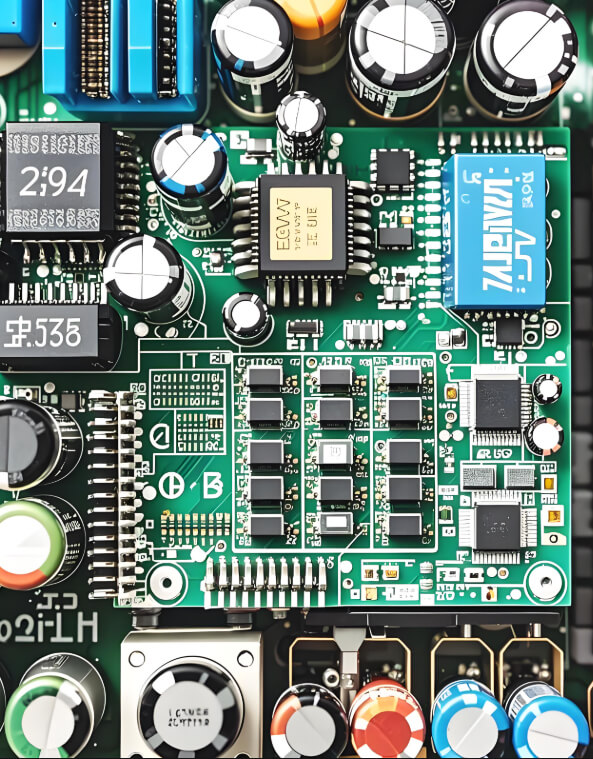
Miniaturization and high performance are core trends in electronic devices, demanding ultra-precise manufacturing of internal components—an area where CNC machining demonstrates unique value.
Connector Parts: Connectors (e.g., USB, HDMI, PCB board connectors) require extremely precise pin holes and contact surfaces to ensure stable signal transmission. CNC drilling and tapping can produce micro-holes (diameter <1mm) and thread features with high coaxiality, avoiding signal interference or poor contact.
Heat Sinks: High-power electronic devices (e.g., CPUs, GPUs in computers, power modules in inverters) generate significant heat, and heat sinks are critical for thermal management. CNC machining can carve intricate fin structures (with fin spacing as small as 0.5mm) on copper or aluminum alloy substrates, maximizing the heat dissipation area while maintaining structural strength.
Sensor Housings: Sensors (e.g., optical sensors in cameras, pressure sensors in smart wearables) are highly sensitive to environmental interference. CNC machining fabricates sealed, high-precision housings to protect internal sensing elements, ensuring measurement accuracy.
3. Mold Making for Electronic Parts
Most mass-produced plastic or rubber components in electronic devices (e.g., keyboard caps, button gaskets) rely on injection molding, and CNC machining is the primary method for manufacturing high-precision injection molds.
Mold Core and Cavity: The core (forming the internal shape of the part) and cavity (forming the external shape) of the mold require micron-level precision to replicate the part’s details. CNC high-speed milling uses carbide tools to process mold steel (e.g., P20, H13) efficiently, creating complex surface contours and texture patterns.
Mold Inserts and Slides: For molds with undercuts or complex structures, CNC machining produces precision inserts and slides that enable the mold to demold smoothly, ensuring the integrity of small parts like micro-USB plugs.
Advantage in Customization: For small-batch electronic products or prototype development, CNC can directly machine plastic parts without mold manufacturing, significantly shortening the development cycle.
 4. PCB (Printed Circuit Board) Related Machining
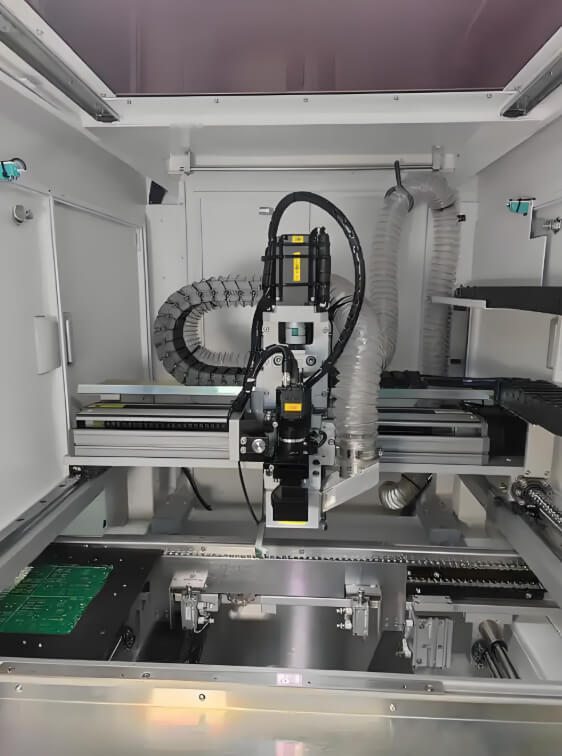
While PCB etching is the main process for circuit patterning, CNC machining complements it in post-processing and specialized PCB manufacturing.
PCB Drilling and Routing: CNC drilling machines create through-holes, blind holes, and buried holes on PCBs for component soldering and interlayer connection. The drilling accuracy (position tolerance <±0.02mm) ensures alignment with circuit pads. CNC routing machines then cut the PCB into individual boards (depaneling) from the panel, with clean edges to avoid short circuits caused by burrs.
Metal Core PCB Processing: Metal core PCBs (used in LED lighting and automotive electronics) integrate a metal substrate for heat dissipation. CNC machining trims the metal substrate and drills mounting holes, ensuring compatibility with device assemblies.
5. Custom and Prototype Production
In the R&D phase of electronic products, rapid prototype development is essential to verify design feasibility, and CNC machining is a preferred prototyping technology.
Fast Iteration: Compared to 3D printing, CNC-machined prototypes (especially metal and engineering plastic parts) have mechanical properties closer to mass-produced products, allowing more accurate testing of structural strength, assembly fit, and functional performance.
Multi-Material Prototyping: It supports processing of various materials used in formal production (e.g., aluminum alloy for chassis prototypes, PEEK for high-temperature-resistant component prototypes), helping R&D teams validate material suitability early.
Typical Prototype Applications: New smartphone structural prototypes, wearable device chassis, and custom test fixtures for electronic component testing.
Core Advantages Driving Its Application in Electronics
Ultra-High Precision: Meets the miniaturization needs of electronic components, with tolerances controllable within ±0.005mm for critical parts.
Material Versatility: Processes metals, plastics, composites, and ceramics, adapting to the diverse material requirements of electronic devices.
Flexibility: Easily switches production between different components by modifying CNC programs, suitable for both mass production and small-batch customization.
Efficiency and Consistency: High-speed machining reduces production time, while automated operation ensures consistent quality across thousands of parts, critical for electronic product assembly lines.
In summary, CNC machining underpins the entire electronic device manufacturing chain—from R&D prototypes to mass-produced components and mold making. As electronic products pursue higher performance, smaller sizes, and smarter functions, the demand for CNC machining with higher precision, faster speed, and greater flexibility will continue to grow.

 Jason
Jason +86 13902935856